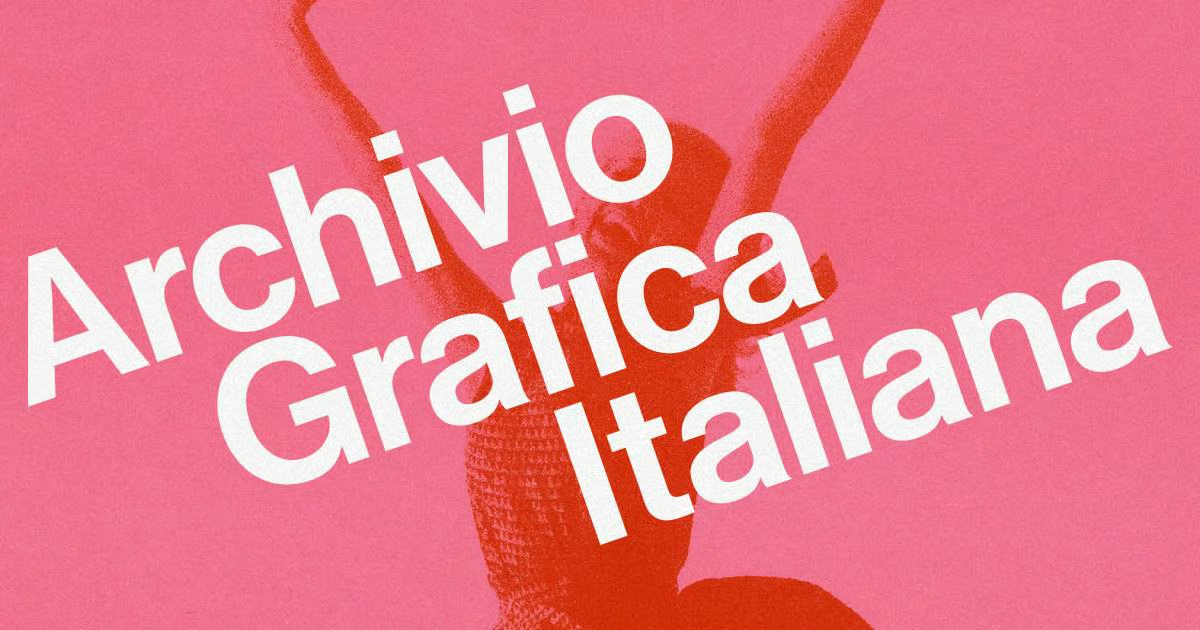
Archivio Grafica Italiana is the first digital archive dedicated to the Italian graphic design heritage. A growing overview to spread and promote the culture of quality that distinguishes the Italian design tradition. From the greatest classics to the best contemporary projects, commissioned by Italian clients or made by Italian designers, to explore and discover the fundamental aesthetic and cultural contribution brought by the Italian graphic design all over the world.
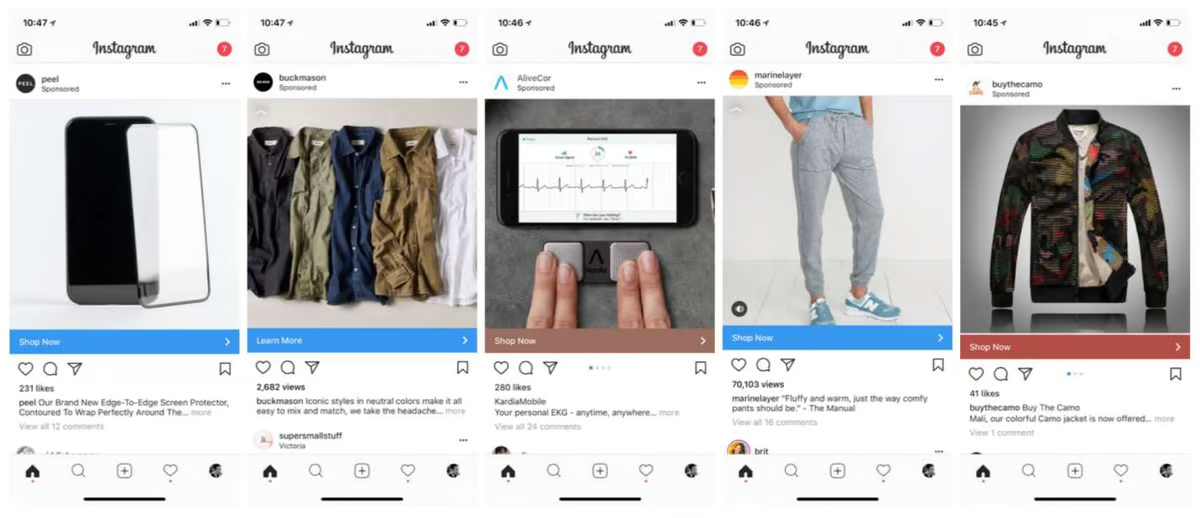
For the past decade we’ve invested in and celebrated companies through the lens of network effects, Amazon’s power in retail, and measuring the potential of a brand by its scale and path to category dominance. We assumed that antiquated monolithic brands would be attacked by new modern brands that take over consumer consciousness enmasse. But instead, old and big brands are fighting against thousands of tiny brands with low overhead, high on design merchandise, and supremely efficient customer acquisition tactics. Many of us failed to recognize the collective impact of the long-tail of micro brands.
A lot of questions here: how many of these brands will survive the test of time? Isn’t it too risky to build a business on top of a single, closed platform? How can you tell which brand is authentic and which is not? Does it even matter? Only consumers hold the answers.
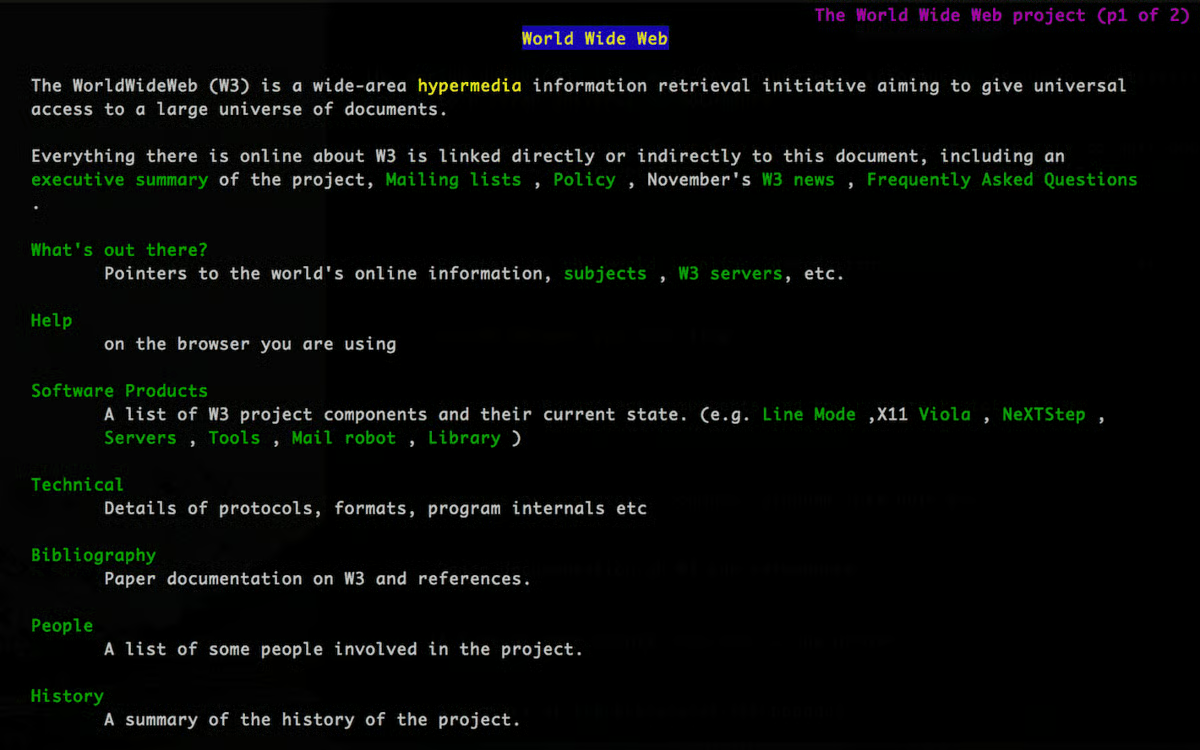
I quit Facebook seven months ago. Despite its undeniable value, I think Facebook is at odds with the open web that I love and defend. This essay is my attempt to explain not only why I quit Facebook but why I believe we’re slowly replacing a web that empowers with one that restricts and commoditizes people. And why we should, at the very least, stop and think about the consequences of that shift.
Another good piece on the current state of the Web as an open platform, with some very practical examples.
While the idea of quitting social media may be unrealistic for most people, it’s important to raise awareness about what is at stake. No platform is inherently bad, as long as users understand what they are giving away in exchange for the service.
So when people voice fears of artificial intelligence, very often, they invoke images of humanoid robots run amok. You know? Terminator? You know, that might be something to consider, but that’s a distant threat. Or, we fret about digital surveillance with metaphors from the past. “1984,” George Orwell’s “1984,” it’s hitting the bestseller lists again. It’s a great book, but it’s not the correct dystopia for the 21st century. What we need to fear most is not what artificial intelligence will do to us on its own, but how the people in power will use artificial intelligence to control us and to manipulate us in novel, sometimes hidden, subtle and unexpected ways. Much of the technology that threatens our freedom and our dignity in the near-term future is being developed by companies in the business of capturing and selling our data and our attention to advertisers and others: Facebook, Google, Amazon, Alibaba, Tencent.
Essential talk by sociologist Zeynep Tüfekçi on the (very current) risks of machine learning applications in social media and advertising networks.